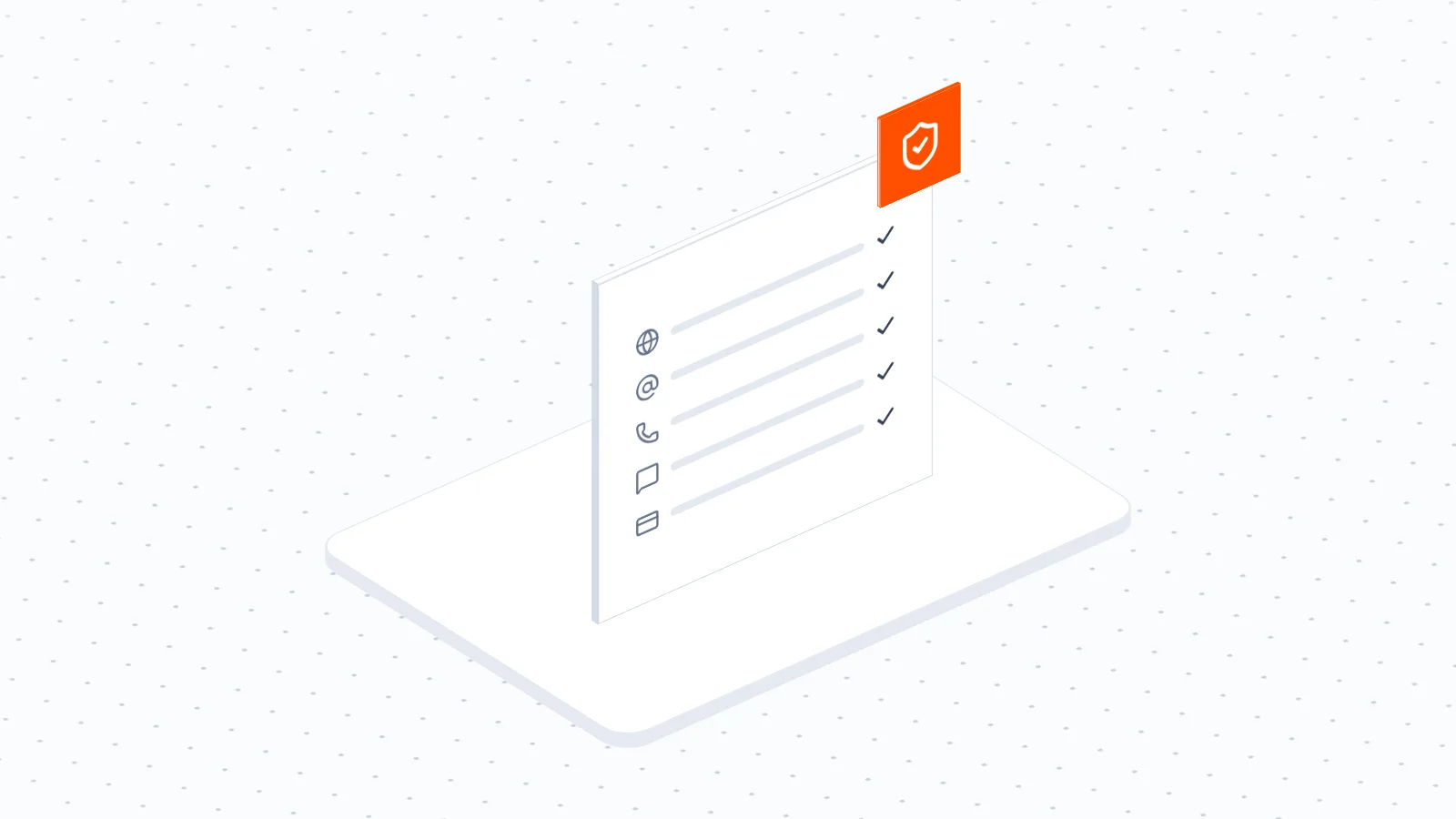
An official channels page lists, in one place, every website, social account, phone number, sender name and payment method that's really yours, plus what you never do, such as asking for fees by text. Publish it at a short address, link it from your footer and support replies, and point customers to it whenever a fake store, ad or message appears.
Key terms · 2
Official channels page
A page on your own website that lists your real websites, accounts and contact methods, so customers can check whether something claiming to be you is genuine.
Never list
The things your company never does, such as asking for passwords or redelivery fees by text. Often the fastest way for a customer to spot a scam.
On your main website, at a short address customers can type, such as yourbrand.com/official. Link it from the footer of every page, from your order emails and from the bio of your social accounts.
Won't scammers just copy the page?
They can copy it onto a fake site, but the page only helps customers who reach it on your real domain, which is why the first line should say what that domain is. Linking to it from your verified social accounts and order emails makes the real version easy to find.
How often should we update it?
Whenever an account, number or domain changes, and before every big sales period. An out-of-date page is worse than none, because customers trust it.
Should we list the fake sites we've found?
Usually not by name. A list of fakes goes out of date in days and can send curious people to dangerous pages. Describe the patterns instead, and link to your current warning if there's an active campaign.
Spent seven years in cybersecurity helping build Lumu Technologies before founding Sentrike, where he builds AI agents that find and take down phishing sites and brand impersonators.
Researchers found AI assistants pointing shoppers to fake stores during Black Friday 2026. What happened, why it happens, and what brands can do so assistants send people to the real store.
Scammers send fake delivery and redelivery-fee texts in your company's name. A playbook for retailers and couriers: what to set up before December, and what to do when a wave starts.
A fake store is copying your brand in Colombia or elsewhere in Latin America. Who to report it to, including .co domains, CAI Virtual and ColCERT, and how to warn customers on WhatsApp.
Nov 30, 2026 · 4 min read
When a fake store, ad or text uses your name, the first thing customers ask is "Is this really you?" If the answer is spread across a help article, an old press release and a support agent's memory, they guess. An official channels page answers it in one place, in words a customer, a support agent, a bank and an AI assistant can all check.
It also saves time in a crisis. Instead of writing a new warning every time a fake appears, you post one line: "A fake store is using our name. Here's how to tell what's really us," with a link. Below is a template you can copy, and how to make it work.
Copy this, replace the brackets and delete what doesn't apply.
# How to recognize [Brand]'s official channels

Scammers sometimes copy [Brand]'s name, website and products to take money or
personal details. This page lists everything that's really us. If something
claiming to be [Brand] isn't listed here, treat it as fake.

## Our website
Our only online store is [https://yourbrand.com]. In [country], it's
[https://yourbrand.com.co]. Always check the address before you pay.

## Where we sell
- Our website and our app on the App Store and Google Play
- Authorized marketplaces: [Marketplace, store name]
- Authorized resellers: [list or link]
We don't run "outlet" or "closing-down" stores on other websites.

## Our social accounts
- Instagram: @[handle]   - Facebook: [page URL]   - TikTok: @[handle]
- LinkedIn: [company page URL]   - WhatsApp Business: [number]

## How we contact you
- Email only from addresses ending in @[yourbrand.com]
- Texts only from [sender name or short code]
- Delivery tracking only at [https://yourbrand.com/track] or in our app
- Phone: [number]. We'll never ask you to call a number from a text.

## How you can pay
[Card, PayPal, PSE, Mercado Pago...]. We never ask you to pay by transfer
to a personal account, gift card or cryptocurrency.

## We will never
- Ask for your password, card PIN or one-time codes
- Ask for a redelivery, customs or release fee by text or WhatsApp
- Offer discounts of [70%+] through ads that link to other websites
- Message you from a personal account asking for payment

## Think you found a fake?
Send the link or a screenshot to [abuse@yourbrand.com]. If you've already paid,
contact your bank straight away, then tell us.

Last updated: [date]
A short address customers can type, such as /official or /security.
Linked everywhere: site footer, order and shipping emails, social bios, support macros, invoices.
Plain text, not an image, so search engines and AI assistants can read and quote it. Assistants that answer "is this the real [brand] store?" need something to cite. See why AI assistants recommend fake stores.
Consistent with everything else: the domains and handles on this page should match your Organization structured data, your social profiles and your marketplace listings.
Translated for every market you sell in, with local payment methods and numbers.
The page tells customers what's real. Sentrike finds what's fake: Brand Protection and Social Monitoring watch for stores, profiles and ads that use your brand, and Takedown gets fake sites removed and flagged by browsers within minutes of a report. See Takedown.